A Comprehensive Guide To Separable Connectors: Types, Benefits, And Applications
In modern medium-voltage electrical distribution systems, the integrity of cable terminations is paramount for ensuring grid reliability and personnel safety. Among the most critical components used today are separable connectors. These components provide a fully shielded and submersible connection for joining cables to switchgear, transformers, and other equipment equipped with bushings.
What Are Separable Connectors?
Separable connectors are specialized power cable accessories designed to provide a safe, insulated, and easily disconnectable interface. Unlike traditional heat-shrink or cold-shrink terminations, these connectors allow for a "plug-and-play" approach to high-voltage maintenance. They are typically manufactured from high-quality EPDM (Ethylene Propylene Diene Monomer) rubber, which provides excellent electrical insulation and mechanical durability.
Essential Functions and Design
The primary role of these devices is to manage electrical stress at the cable end while maintaining a continuous path for the current. Because they are "separable," they allow technicians to connect or disconnect equipment without cutting the cable, significantly reducing downtime during system upgrades or repairs.
Key Categories of Separable Insulated Connectors
When selecting the right components for a power system, it is essential to understand the different classifications of separable insulated connectors. These are generally categorized by their shape and the specific voltage class they support.
-
Elbow Connectors: The most common type, used for connecting cables to transformers or pad-mounted switchgear.
-
Straight Connectors: Used primarily for cable-to-cable joints or in tight spaces where a 90-degree bend is not feasible.
-
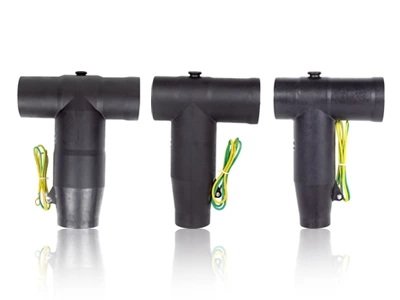
T-Connectors (T-Plugs): Designed for larger cross-sectional areas and higher current ratings, often found in primary distribution networks.
Technical Specifications Overview
| Connector Type | Typical Voltage Range | Current Rating | Application Environment |
| Elbow | 15kV - 35kV | 200A - 600A | Dead-front Switchgear |
| T-Plug | 12kV - 42kV | 630A - 1250A | RMU / Transformers |
| Straight | 15kV - 24kV | 250A - 400A | Indoor/Tunnel Cabling |
The Importance of Screened Separable Connectors
One of the most vital safety features in modern electrical engineering is the use of screened separable connectors. These connectors feature an outer conductive layer—the screen—which is permanently grounded.
This design ensures that the entire outer surface of the connector remains at ground potential. For technical personnel, this means the device is safe to touch even while energized (though standard safety protocols must always be followed). The screening also prevents external environmental factors, such as moisture or dust, from affecting the internal electrical field, thereby eliminating the risk of partial discharge and extending the service life of the cable system.
Best Practices for Installation and Maintenance
To maintain the high reliability of these systems, technicians should ensure that the cable preparation is precise. Using the correct lubricants and ensuring the interface is free of contaminants is crucial for preventing flashovers. Regular inspections should focus on the integrity of the grounding connection of the screened layer to ensure continued safety and performance.