In-depth Analysis: The Internal Structure And Connection Logic Of Push-in Terminal Blocks
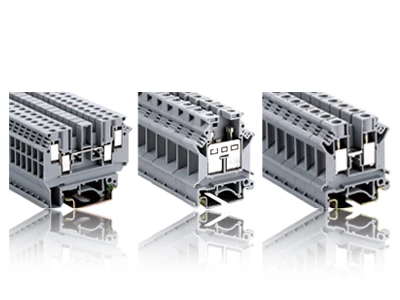
In the field of modern electrical connections, abandoning cumbersome screw fastening has become the mainstream, and the core of this change stems from push fit din rail terminals's ingenious mechanical design. This connector not only simplifies the operation process but also achieves stable transmission of electrical signals and power through its unique internal metal elastic element.
Disassembly of the Core Components of the Push-In Terminal Block
To understand the operating principle of the push fit terminal block connector, it is necessary to observe its three key internal components: a stainless steel spring, a current-carrying conductor, and an insulating shell.
-
High-Tension Spring: Typically made of stainless steel, it is tilted at a specific angle to provide continuous radial pressure to the conductor.
-
Conductive Copper Busbar: As the main body for current transmission, its surface is often tin-plated to increase the contact area and reduce resistance.
-
Wire Removal Hole: Located next to the insertion hole, it is used with a special push rod or small screwdriver to release the tension of the spring and remove the conductor.
Working Details of the Spring Pressure Mechanism
After the conductor enters the insertion hole, the spring inside the push in type terminal block is compressed and undergoes elastic deformation. Due to the unidirectional design of the spring clip, the wire can be smoothly pushed in, but the cutting edge of the spring clip locks the wire when pulled back. This constant contact force does not weaken over time, and the internal physical connection remains firm even in industrial environments with frequent vibrations.
Electrical Performance Analysis of the Contact Interface
When current flows through the push-in terminal block, the stripped end of the wire is directly pressed against the current-carrying copper busbar. This direct contact reduces power loss in intermediate stages. The outer engineering plastic shell has excellent flame retardancy, encasing all metal moving parts to prevent phase-to-phase short circuits or electric shock.
Through this compact and efficient hierarchical arrangement, the push-in terminal block achieves a unity of mechanical locking and electrical connection within a limited space, making it an indispensable technical component in industrial automation and household distribution boxes.