No Heat Required: Benefits Of Cold Shrink Cable Accessories In Modern Power Systems
For decades, heat-shrink technology dominated the electrical industry, but the emergence of cold shrink cable accessories has shifted the paradigm. These components provide a high-quality seal and electrical insulation without the need for torches or specialized heating tools. This technology simplifies installation while enhancing safety in hazardous environments.
How Cold Shrink Technology Works
The core of a cold shrinkable tube consists of a pre-stretched elastomer sleeve placed over a removable plastic support core. During installation, the technician positions the tube and unwinds the core, allowing the material to collapse onto the cable. This creates a permanent, radial pressure seal that adapts to the cable's thermal expansion and contraction.
Advantages of Using Cold Shrink
-
Safety First: Eliminating open flames or heat guns makes cold shrink ideal for oil, gas, and chemical facilities.
-
Speed and Precision: Installation time is typically 50% faster than traditional heat-shrink methods, reducing labor costs.
-
Consistency: Since the pressure is pre-determined by the material tension, the quality of the seal does not depend on the installer's heating technique.
-
Durability: The elastic nature of the cold shrink tubing ensures it remains tight even during heavy load cycles and temperature fluctuations.
Applications in Power Infrastructure
Outdoor Cold Shrink Termination
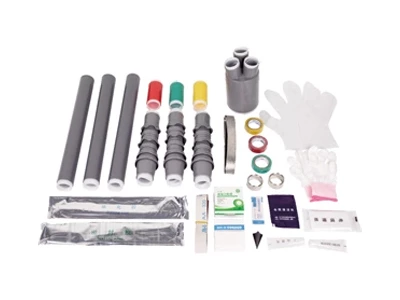
A cold shrink termination is essential for connecting medium-voltage cables to transformers or overhead lines. These kits include integrated rain skirts to manage leakage currents and provide superior UV resistance. The constant tension of the rubber prevents moisture ingress, which is the primary cause of electrical failure in outdoor environments.
General Insulation and Protection
Beyond high-voltage applications, cold shrinkable tube solutions are frequently used for:
-
Primary electrical insulation for all solid dielectric cables.
-
Environmental sealing for communication connectors.
-
Physical protection against abrasion and acid/alkali exposure.
Proper Selection Criteria
Selecting the correct cold shrink tubing requires measuring the cable diameter accurately. The selected tube must have a "shrink-to" diameter smaller than the cable's minimum diameter to ensure a constant radial force. This interference fit is what guarantees the long-term reliability of the connection.