How Separable Connectors Manage Electrical Transitions In Power Networks?
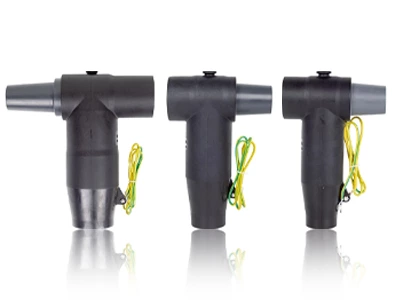
Medium voltage distribution systems require reliable points of isolation. Separable connectors provide the interface that allows technicians to connect and disconnect cables from switchgear and transformers. Transitioning power effectively relies on internal geometric shaping that manages electrical stress during operation.
The Connection Transition Process
The physical change during a coupling sequence involves mechanical and electrical alignment:
-
Cable stripping prepares the conductor and semiconducting layers to correct specifications.
-
The connector housing slides over the cable interface, creating a compression seal.
-
Threaded copper pins engage internal busbars to establish the primary current path.
-
Outer conductive jackets link directly to the ground system for voltage relief.
Separable connectors transfer electrical power by utilizing a male pin and female socket interface housed within an insulated, elastomeric body. This design maintains continuous shielding across the cable joint while allowing repetitive manual disconnection without damaging circuit components.
Performance Parameter Matrix
| Component Property | Standard Value | Operational Impact |
|---|---|---|
| Dielectric Strength | 35 kV | Prevents voltage breakdown across the interface |
| Continuous Current | 630 A | Determines maximum load capacity without overheating |
| Submersion Depth | 2 Meters | Ensures waterproof sealing in flooded vaults |
Shielding and Insulation Functions
High voltage transitions generate intense localized electrical fields. Utilizing screened separable connectors solves this issue by incorporating an external conductive layer. This configuration encapsulates the internal stress cones, keeping the outer surface at ground potential and preventing flashovers.
Operational safety relies on high-grade elastomeric materials. Utilizing separable insulated connectors ensures the outer rubber layer remains safe to touch during live operations. This layout protects field personnel from accidental shock during routine grid maintenance and testing procedures.
Interface Performance Maintenance
Over time, moisture ingress and thermal cycling can degrade underground cable joints. Installation requires strict adherence to torque limits and the application of specialized silicone grease. This compound displaces air gaps within the rubber housing, eliminating potential sites for partial discharge and ensuring a stable connection transition.