Preventing Cable Flashover: The Self-healing Physics Of Cold Shrink Accessories
Cold shrink cable accessories prevent electrical tracking through hydrophobic self-healing, where low-molecular-weight silicone oligomers migrate continuously to contaminated surfaces. This active process suppresses dry-band arcing and leakage current without requiring manual washing or external coatings. Maintaining high surface resistance under severe moisture allows these components to neutralize conductive paths before permanent carbon tracks form.
The Physics of Surface Tracking in Cable Systems
Electrical tracking begins when environmental moisture and particulate pollution form a conductive film across insulation surfaces. Continuous voltage stress causes localized temperature spikes, evaporating water droplets and creating narrow dry zones. The resulting high electric field gradients trigger localized micro-discharges, degrading base polymers into carbonized paths that cause premature dielectric breakdown.
Hydrophobic Recovery in Silicone Cold Shrink Tube Designs
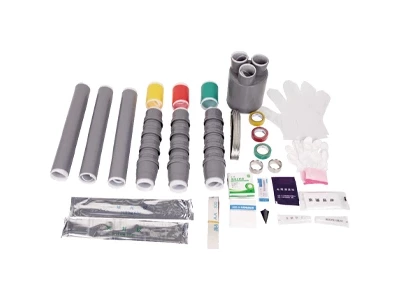
Unlike rigid polymeric shields that rely on passive resistance, a silicone cold shrink tube exhibits active surface recovery.
-
Continuous Oligomer Migration: Low-molecular-weight siloxanes diffuse from the bulk material to encapsulate surface contaminants.
-
Droplet Beading: Water condenses into isolated spherical beads rather than continuous conductive films, breaking electrical leakage paths.
-
Discharge Suppression: Minimal leakage current prevents dry-band arcing, stopping material erosion at the molecular level.
Operational Cost Impact Across High-Moisture Installations
Deploying a flexible cold shrink termination reduces grid downtime and maintenance demands in coastal or industrial settings.
-
Reduced Outage Frequency: Active hydrophobic transfer prevents flashovers during sudden humidity surges or fog events.
-
Zero Cleaning Cycles: Eliminates frequent high-pressure water washing or grease application schedules.
-
Fast Field Assembly: A pre-stretched cold shrinkable tube installs without heat torches, lowering labor risks and installer errors.
Performance Comparison of Cable Insulation Protection
Selecting appropriate cable insulation ensures extended service life under severe environmental exposure. The table below outlines operational differences between passive protection and active self-healing technologies.
| Feature | Heat-Shrink Materials | Pre-Expanded Elastomer Accessories |
|---|---|---|
| Surface Protection Mechanism | Passive Barrier | Active Hydrophobic Transfer |
| Leakage Current Suppression | Degrades Over Time | Self-Healing Recovery |
| Field Maintenance Interval | Semi-Annual Cleaning | Minimal Inspection |
| Installation Requirements | Open Flame / Heat Gun | Tool-Free Core Extraction |