Ensuring Reliable Electrical Contact In High-voltage Separable Connectors
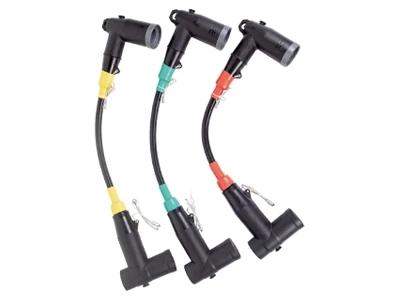
In modern medium-voltage power distribution, maintaining a stable electrical connection is critical for system reliability. When using Separable Connectors, the integrity of the contact interface determines whether a system operates efficiently or suffers from catastrophic failure due to overheating. Achieving a "firm" and lasting conduction involves a sophisticated blend of material science and mechanical engineering.
Mechanical Pressure and the Interface Fit
The primary method for ensuring robust conduction in Separable insulated connectors is the reliance on precise mechanical interference fits. These components are typically designed with high-quality EPDM rubber, which provides the necessary elasticity to maintain constant pressure against the bushing.
Key Factors Influencing Contact Stability
The stability of the electrical path is governed by several physical parameters that prevent intermittent signals or arcing:
-
Active Compression: The housing exerts radial force to eliminate air gaps.
-
Contact Resistance: Minimized through silver-plated or tin-plated copper alloy components.
-
Thermal Cycling Resilience: The ability to expand and contract without losing mechanical grip.
| Component Type | Common Material | Primary Function |
| Inner Electrode | High-conductivity Copper | Current path |
| Stress Cone | Semi-conductive Rubber | Electric field control |
| Outer Jacket | Peroxide-cured EPDM | Environmental sealing |
The Role of Shielding in Signal Integrity
For Screened separable connectors, the conductive outer layer plays a dual role. While the internal contact pin handles the primary load, the external screening ensures that the electric field is contained. This grounding prevents external interference and reduces the risk of partial discharge, which could otherwise degrade the physical contact points over time.
Why contact pressure remains stable over time
To ensure a permanent and reliable connection, separable connectors utilize a calibrated compression system where the metallic contact pin is threaded or "snapped" into a fixed receiver. This metal-to-metal interface is then encapsulated by an insulating body that applies persistent inward pressure, effectively sealing the connection against oxidation and moisture ingress.
Longevity Through Proper Lubrication
Even the best-engineered systems require assistance during installation. The use of high-dielectric silicone grease is standard practice. This lubricant does not just facilitate the sliding of the connector onto the bushing; it fills microscopic voids on the surface of the insulation, ensuring that the "firmness" of the fit translates into a void-free electrical environment. By preventing air pockets, the system maintains a consistent dielectric strength across all contact surfaces.