Primary Functions Of Separable Connectors In Power Systems
Electrical grids require flexible components to handle maintenance without causing extensive downtime. Separable connectors serve as the primary interface to bridge this gap, providing a secure method to join power cables to equipment like switchgear and transformers. These components allow rapid isolation and reconfiguration of circuit lines.
Definition of a Detachable Connector
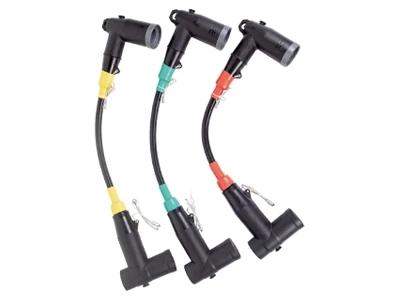
A separable connector is a fully insulated and shielded plug-in termination device designed to connect medium or high voltage underground cables to electrical apparatus. These components enable operators to establish a physical and electrical connection that can be uncoupled repeatedly without damaging the cable infrastructure.
+------------------+       +------------------------+       +-------------------+
| Electrical Bushing| <---> | Separable Connector Body| <---> | Polymeric MV Cable|
+------------------+       +------------------------+       +-------------------+
Three Essential Operations of the Interface
Modern electrical grids depend on precise performance characteristics. The design of these cable accessories addresses mechanical security, environmental protection, and operational safety through specific built-in mechanisms.
-
High Voltage Insulation: Solid rubber bodies, often using separable insulated connectors made from ethylene propylene diene monomer, manage intense electrical stress fields up to 42 kilovolts or higher.
-
Ground Potential Security: Utilizing screened separable connectors ensures the outer jacket stays at safe ground potential, protecting maintenance crews from accidental contact shocks.
-
Submersible Sealing: Precision molded interfaces prevent moisture ingress and partial discharge failures, even when equipment operates in subterranean pits or flooded chambers.
Practical Field Implementation Scenario
Consider a standard 24 kilovolt ring main unit substation requiring emergency maintenance on a single feeder circuit.
-
System isolation occurs by de-energizing the target circuit sector safely.
-
Technicians use the integrated capacitive test points on the outer body to verify zero voltage existence.
-
The bolted or plug-in interface allows the operator to uncouple the terminal within ten minutes.
-
The remaining network loops stay active, keeping local commercial power consumers online.
Longevity and Network Integration
High-quality insulated interfaces maintain mechanical elasticity and dielectric strength over operational lifespans exceeding forty years. This durability ensures stable power flow across utility networks, wind farms, and industrial distribution grids while minimizing overall system maintenance costs.