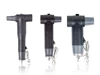
Why Are Cold Shrink Cable Fittings Safer After Proper Installation?
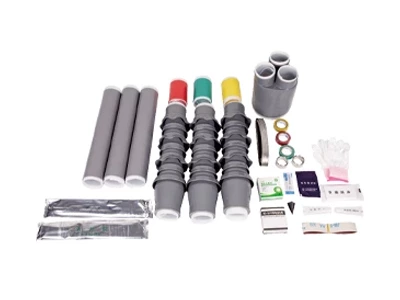
Cable splicing and termination present critical safety hazards when using open flames in confined, volatile environments. Cold shrink cable accessories eliminate the need for heat sources, special permits, and heavy tools during installation.
Elimination of Installation Hazards
The safety advantage stems from the application method. Traditional hot-applied methods rely on propane torches, raising risks of toxic gas ignition or thermal damage to adjacent cables. Cold shrink accessories rely on stored mechanical energy, requiring only the removal of an inner plastic core to deploy.
Operational Safety Factors
Cold shrink cable accessories enhance installation safety by eliminating open flames, high-temperature heat guns, and hot work permits from volatile job sites. Pre-stretched on a removable plastic core, these accessories contract immediately over the cable joint upon core removal, providing a continuous, reliable environmental seal without the risk of thermal damage or operator burns.
-
No hot work permits are needed for hazardous oil, gas, or chemical facilities.
-
Zero risk of accidental torch burns to field technicians during tight-space maneuvers.
-
Elimination of toxic fumes generated by overheating heavy-walled polymers.
Consistent Mechanical Seal vs Thermal Stress
The reliable performance of an installation depends on the pressure applied to the cable jacket over long-term operations. The structural differences in materials dictate how effectively a connection resists environmental degradation, moisture ingress, and electrical breakdown.
Materials and Sizing Precision
-
Continuous Radial Pressure: The formulation of an epdm cold shrink tube allows it to expand and contract dynamically with the cable during thermal cycling, preventing moisture gaps.
-
Reduced Human Error: Unlike a cold heat shrink comparison where heat application uniformity depends on operator skill, cold shrink applies consistent pressure automatically.
-
Engineered Sizing: Technicians choose from specific cold shrink tubing sizes to ensure exact fitment tolerances, removing guesswork from the sealing process.
Long-Term Reliability and Cost Efficiency
Selecting a reliable cold shrink sleeve minimizes the potential for flashovers caused by improper heating techniques. Because the active shrinkage relies on the physical properties of elastomeric compounds rather than manual torch movement, the finished joint achieves uniform insulation thickness and consistent electrical stress relief. This predictable behavior lowers maintenance cycles and prevents catastrophic power outages across medium-voltage networks.