The Secrets Of Epdm Materials: Hidden Threats To Industrial Cold Shrink Cable Accessories
Power grid failures often begin with a microscopic breach. In coastal plants and chemical processing facilities, standard cable insulation continuously fights an invisible war against moisture, salt spray, and airborne pollutants. When traditional sealing methods lose their flexibility, exposure to these elements triggers rapid insulation breakdown, leading to catastrophic system outages before anyone notices the initial damage.
Why Standard Insulation Fails Under Chemical Stress
The main vulnerability in power distribution networks lies at the connection points. Thermal cycling causes cables to expand and contract, which creates microscopic gaps if the sealing material cannot adapt. Environmental contaminants exploit these gaps, leading to tracking, flashovers, and localized corrosion that compromises the entire circuit.
The Problem with Rigid Sealing Methods
-
Loss of Tension: Materials that lack continuous elasticity gap over time.
-
Environmental Ingress: Microscopic pathways allow moisture and chemical accumulation.
-
Thermal Mismatch: Unequal expansion rates separate the seal from the jacket.
The Chemistry Behind Long-Term Environmental Protection
To survive aggressive industrial environments, sealing components require a precise molecular structure. This is where specialized rubber compounds change the dynamics of grid maintenance.
Material Performance Matrix
| Exposure Type | Standard Insulation Profiles | High-Performance Compound Profiles |
|---|---|---|
| Coastal Salt Mist | High risk of moisture tracking | Total moisture isolation |
| Industrial Acids | Surface degradation and pitting | Inert chemical barrier protection |
| Thermal Fluctuations | Material separation and cracking | Continuous dynamic tension |
Engineering a Continuous Moisture Barrier
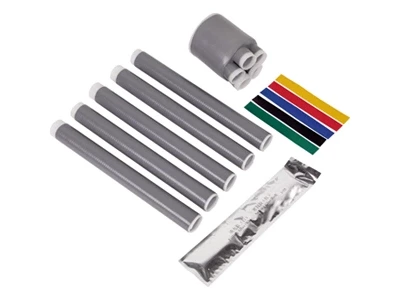
How does modern material science solve the issue of environmental degradation? The answer lies in epdm cold shrink technology. By leveraging a saturated polymer backbone, this specific compound resists oxidation, ozone, and UV exposure natively, maintaining its physical integrity where other materials crack and brittle.
Redefining Reliability for Cable Jointing Systems
The application of electrical cold shrink mechanisms removes the human error associated with installation torches. Because these cold shrink cable accessories exert constant radial pressure, they create a living seal that breathes with the cable. This active defense mechanism ensures that even under severe chemical exposure, the internal metallic shields remain completely isolated from corrosive elements.