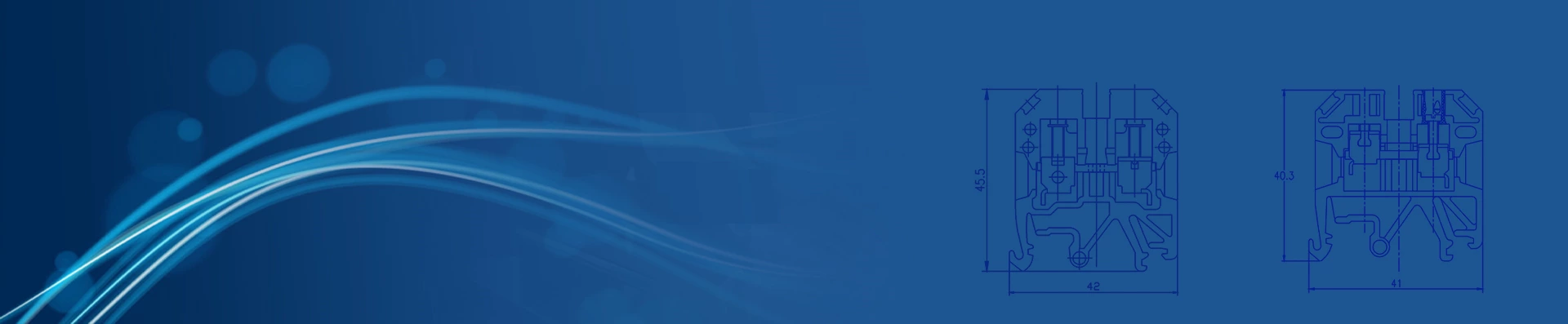
Fuse Terminal Block Applications: Control Vs. Distribution Circuits
- Type:
- Fuse modular terminal block
- Fuse Type:
- Glass / ceramics / ...G / 5 x 20
- Nominal Voltage:
- 500 V
- Nominal Current:
- 6.3 A
- Number Of Connections:
- 1
- Connection Method:
- Push-in connection
- Rated Cross Section:
- 4 mm²
- Mounting type:
- DIN Rail (EN 60715)
- Compatible Rail:
- NS 35/7,5, NS 35/15
- Cross Section:
- 0.2 mm²- 6 mm²
- Color:
- black
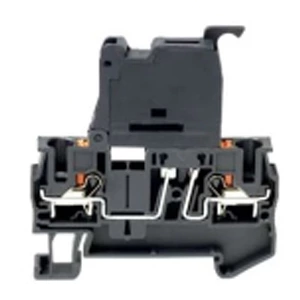
Control circuits need low-current, fast-acting fuse terminal blocks with visual indication. Distribution circuits need higher-current, time-delay blocks with higher interrupt capacity. Four steps apply: measure load current, match fuse speed, confirm voltage and interrupt rating, select indication for the environment. A fuse terminal block is not selected by current alone—circuit function decides fuse speed, voltage rating, interrupt capacity, and indication.
Control vs Distribution: What Changes
| Parameter | Control Circuit | Distribution Circuit |
|---|---|---|
| Typical current | ≤ 6.3A | 16–32A |
| Fuse speed | Fast-acting | Time-delay |
| Voltage rating | 250V AC/DC | 250–660V+ |
| Interrupt capacity | Lower | Higher |
| Main risk | Signal loss | Overcurrent damage |
The same DIN rail block can serve both roles. Fuse rating and interrupt capacity follow the available fault energy.
Control Circuit Applications
Control circuits carry PLC I/O, relay coils, and 4–20 mA loops. Fault current is low. A blown fuse stops a signal but rarely damages hardware.
PLC I/O and Relay Coils
-
24V DC control power
-
Single-channel protection
-
Fast-acting fuse
-
Visual alert reduces troubleshooting time
A fuse terminal block with led indicator shows the open circuit without a meter. For 24V DC banks, a fused terminal block with led speeds fault isolation.
Instrument Loops
Process panels route 4–20 mA signals through a fused connector block. Each channel gets its own fuse and ground reference. The block allows loop disconnection for calibration without disturbing adjacent wiring.
Solenoid and Valve Banks
A terminal block fuse holder near valve outputs protects solenoid coils. Fuse rating must ride through inrush current, often three times the coil rating. When one coil shorts, the indicator pinpoints the fault.
Distribution Circuit Applications
Distribution circuits feed motor starters, lighting, power supplies, and sub-panels. Current reaches 16–32A for modular blocks.
Feeder Branches to Motor Starters
-
16–32A modular terminals
-
Time-delay fuse for motor inrush
-
Interrupt capacity matches bus fault current
Building Lighting and Heating
Building installations use fused blocks for lighting, heating, and auxiliary circuits. AC circuits often use neon indication. Conductor cross-section must match terminal size.
Solar and DC Combiners
Solar string combiners need DC-rated holders, often 1000V DC. Remote arrays benefit from visual indication to isolate a failed string.
Step-by-Step Selection Method
-
Measure normal and inrush current.
-
Pick fuse speed: fast-acting for control, time-delay for distribution.
-
Confirm voltage and interrupt capacity.
-
Select indication: LED for DC control panels, neon for AC building circuits.
-
Check terminal size against conductor cross-section.
-
Verify DIN rail mounting and standard compliance.
Common Mistakes
-
Using a 250V block on a 600V feeder.
-
Fast-acting fuse on a motor feeder—nuisance tripping.
-
Time-delay fuse in a control loop—slow fault detection.
-
Ignoring interrupt capacity.
-
Mismatching terminal and conductor sizes.
-
Using the wrong indicator type for AC or DC.
FAQ
Q: What is the difference between control and distribution fuse terminal blocks?
A: Control blocks protect low-current signals, usually ≤6.3A, with fast-acting fuses and visual indication. Distribution blocks protect feeder branches, usually 16–32A, with time-delay fuses and higher interrupt ratings.
Q: When should a fuse terminal block with LED indicator be used?
A: Use LED indication in DC control panels where a blown fuse stops a signal. The LED shows the open circuit without a multimeter, reducing downtime.
Q: Can a fused connector block be used in distribution circuits?
A: Yes, if the voltage, current, and interrupt ratings match the feeder. Confirm the block rating exceeds downstream load and stays below conductor ampacity.
| Overall Dimensions | ||||
| Width / Thickness / Height (mm) | 59/6.2/63.5 | |||
| Stripping Length | 13 | |||
| Technical Parameters | ||||
| Voltage (V) | 500 | |||
| Electric current (A) | 6.3 | |||
| Section (mm²) | 4 | |||
| Crimping Range | ||||
| Rigid Wire (mm²) | 0.2-6 | |||
| Flexible Wire (mm²) | 0.2-4 | |||
| Fusible Core | R054 Ф 5*20 | |||
| Install the Track | ||||
Can be mounted on  shaped rails. shaped rails. |
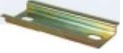 |
TH35-7.5 | ||
| TH35-15 | ||||
| Partition | ||||
| Used for terminating terminal blocks to achieve electrical isolation. |  |
4RDG | ||
| Test Attachment | ||||
| Test Plug: Used in conjunction with the corresponding component for circuit testing. | PS-2 | |||
| Quick-Connect Coupler | ||||
| It can be inserted directly into the center of the terminal to establish a connection between terminals. | 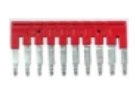 |
2 Bit | FBS 2-6 | |
| 3 Bit | FBS 3-6 | |||
| 4 Bit | FBS 4-6 | |||
| 5 Bit | FBS 5-6 | |||
| 10 Bit | FBS 10-6 | |||
| 20 Bit | ||||
| 30 Bit | ||||
| Marker Strip | ||||
| The marking strips feature standard horizontal and vertical numbering from 1 to 600; alternatively, numbering can be applied based on technical specifications provided by the customer. | blank |  |
middle | ZB 6 (blank) |
| Horizontal Typing | 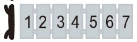 |
ZB 6 (horizontal) | ||
| Vertical Typing | 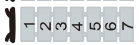 |
ZB 6 (vertical) | ||
 |
Both sides | BFM 6 (blank) | ||
| BFM 6 (horizontal) | ||||
| BFM 6 (vertical) | ||||
| Marking Bracket | ||||
| For detailed instructions on usage, please refer to the attached section. | 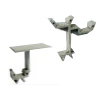 |
|||
| End | ||||
| Tubular Pre-insulated Terminal | 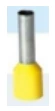 |
E4010 | ||
| Tubular Non-Insulated Terminal |  |
|||