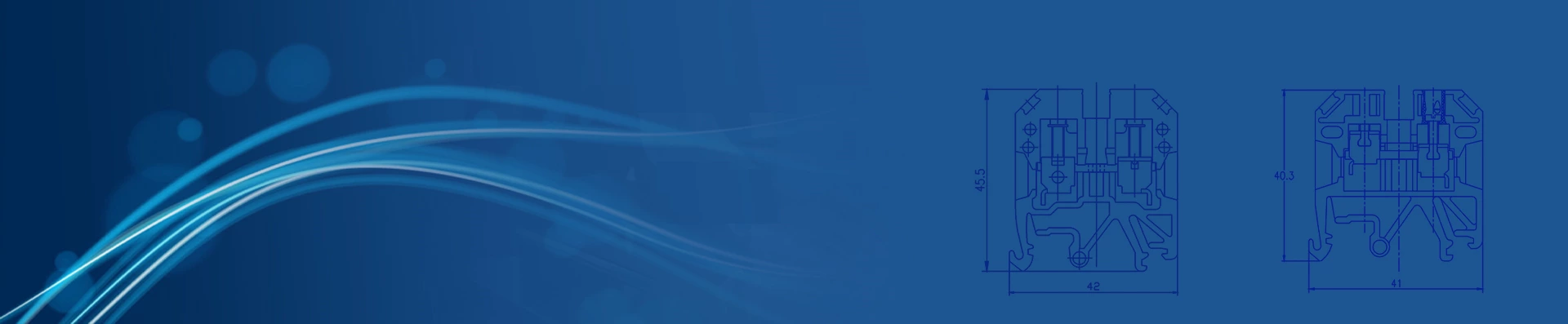
Is A Disconnect & Test Terminal Block A Circuit Switch?
- Type:
- Knife-disconnect terminal block, With test socket screws for insertion of test plugs
- Nominal Voltage:
- 500 V
- Nominal Current:
- 16 A
- Thermal Continuous Current Ith:
- 16 A
- Connection Method:
- Screw connection
- Rated Cross Section:
- 4 mm²
- Cross Section:
- 0.2 mm² - 6 mm²
- Color:
- gray
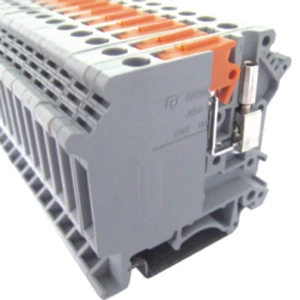
No. A disconnect & test terminal block is not a circuit switch. It creates a maintenance isolation point for testing. A circuit switch makes and breaks load current. Three checks before opening any circuit:
-
Load is de-energized or within the block's switching capacity.
-
Lockout/tagout is applied.
-
Test leads match the pick-off sockets.
Terminal Block vs Switch
| Item | Terminal block | Switch |
|---|---|---|
| Main function | Maintenance isolation and testing | Load making and breaking |
| Operation frequency | Occasional service use | Normal operation |
| Breaking capacity | Not rated for load break | Rated for full load current |
| Wiring state | Conductors remain terminated | Conductors may be separate |
| Standard scope | IEC 60947-7-1 | IEC 60947-3 |
What a Disconnect & Test Terminal Block Does
Knife or slide operation
A test disconnect terminal opens a single circuit at the terminal point. Conductors stay terminated. The knife or slide separates the connection for voltage, resistance, or insulation checks.
Test pick-off access
The open position is a circuit state, not proof of an electrically safe condition. Test pick-off sockets allow probes to contact the circuit without disturbing field wiring.
Measurements without rewiring
A test disconnect terminal block supports periodic checks while keeping the original connection intact. This reduces wiring errors during fault tracing and commissioning.
How a Circuit Switch Differs
Load-breaking rating
A switch is rated to make and break load current. It handles arc and inrush during operation. Disconnect terminal blocks open a circuit only for maintenance.
Arc and inrush handling
Arc suppression and contact design allow frequent switching. A terminal block knife is not built for repeated load interruption.
Standard boundaries
IEC 60947-7-1 covers terminal blocks. IEC 60947-3 covers switches. The two standards define different performance duties.
Misuse Risks and Safety Checks
-
Missing voltage verification.
-
No lockout/tagout.
-
Switching under load.
-
Ignoring back-feed or parallel paths.
Misidentifying a disconnect terminal as a switch can create unsafe conditions. An open knife does not remove back-feed, parallel paths, or capacitive coupling. Contact wear and arc damage occur when the device is operated under load.
Fused Terminal Block Compared
Overcurrent protection
A fused terminal block adds overcurrent protection to the terminal body. A hinged fuse carrier holds the fuse and often a spare.
Isolation and measurement
A test disconnect terminal block provides isolation and test access. It does not replace a fuse for short-circuit protection.
Combined use
Both can appear in the same panel for different circuits. One protects downstream devices. The other supports maintenance measurement.
When to Specify Disconnect & Test Terminal Blocks
-
CT secondary circuits for periodic testing.
-
Railway signal circuits for fault localization.
-
Marshalling cabinets for field signal isolation.
-
PLC I/O maintenance measurement.
Disconnect terminal blocks suit occasional isolation for testing or fault tracing. A test disconnect terminal supports voltage, resistance, and insulation measurement at the terminal point. Pick-off sockets ensure reliable contact with measuring devices.
Selection Checklist and Parameters
| Parameter | Check |
|---|---|
| Rated voltage | Match circuit voltage |
| Rated current | Match load current |
| Connection range | Match conductor cross-section |
| Mounting rail | Match DIN rail type |
| Test sockets | Match test adapters |
| Torque | Follow specification |
| Strip length | Follow specification |
A knife-disconnect terminal block often carries 400 V to 500 V and 20 A to 30 A, based on cross-section and connection technology. Verify DIN rail type, test adapter compatibility, and end plates before ordering.
Safe Test Steps
-
Confirm circuit identification.
-
De-energize or confirm switching capacity.
-
Apply lockout/tagout.
-
Verify absence of voltage.
-
Insert test probes.
-
Record readings.
-
Restore knife and recheck.
These steps reduce arc flash and contact damage risks. Lockout/tagout remains mandatory before any maintenance work.
FAQ
Q: Can a disconnect terminal block be used as a switch?
A: No. It is not rated for load breaking.
Q: What is a test disconnect terminal?
A: It isolates a circuit for measurement.
Q: Is a fused terminal block the same as a disconnect terminal block?
A: No. One provides overcurrent protection, the other isolation.
Q: Are disconnect terminal blocks rated for load breaking?
A: No.
Q: What standard covers disconnect terminal blocks?
A: IEC 60947-7-1.
| Model | Function | Wire IEC cross-section | Wire UL | Thickness |
| JHD5-2.5SK | 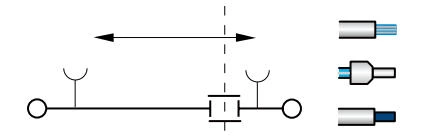 |
4 mm² 2.5 mm² 4 mm² |
12 AWG 14 AWG 12 AWG |
6.2 mm |
| Maximum current | Number of packages | Thickness/Height( )/Width mm )/Width mm |
Rated voltage/rated current/rated cross-sectior |
| 16 A | 84 | 6.2/58.5/51 | 800V/16A/4 mm² |
Specfication:
| Marking tags | ZB6 |
| Screw/Tightening torque(Nm) | M3/0.6 |
| Material | PA |
| Flame retardant rating UL-94 | V0 |
| Dimensions | 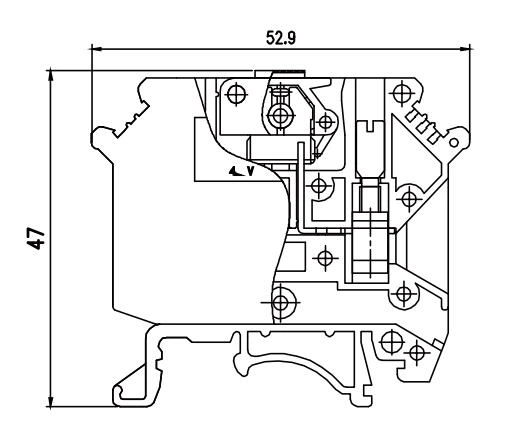 |
With universal mounting feet for standard top-hat(Ω profile) and G-profile DIN rail mounting.
