Cold Shrink Vs Heat Shrink Cable Accessories: What's The Construction Difference?
- Power Frequency Withstand Voltage:
- 117 kV, 5 min, No Breakdown
- Partial Discharge Test:
- Partial Discharge Magnitude≤ 10 pC at 45 kV
- Impulse Voltage Test:
- 200 kV, 10 positive and 10 negative impulses, no breakdown
- Constant Voltage Load Cycling Test (in Air):
- 65 kV, conductor temperature 95–100 ℃, total 60 cycles, no breakdown, no flashover
- Moisture Test (Indoor):
- 32.5 kV, 300 h, no breakdown, no flashover
- Salt Spray Test (Outdoor):
- 32.5 kV, 1000 h, no breakdown, no flashover
- DC Withstand Voltage:
- 104 kV, 15 min, No Breakdown
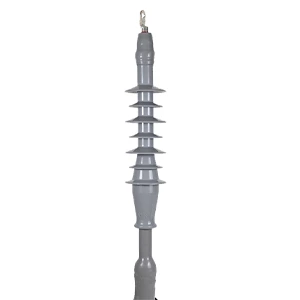


Cold shrink cable accessories install by pulling a support core from a pre-expanded rubber sleeve. Heat shrink relies on a torch to shrink plastic tubing. This single difference changes every construction step. Cold shrink removes hot work, but the core pull is irreversible, so positioning and surface preparation demand more attention.
Core Construction Differences
Heat shrink allows reheating and repositioning before cooling. Cold shrink offers no second attempt. An electrical cold shrink sleeve contracts permanently once the core is removed. Heat shrink often uses multiple pieces, increasing misplacement risk. Cold shrink kits typically deliver a one-piece rubber body, reducing installation errors.
Cold Shrink Installation Steps
-
Strip the cable jacket and clean the insulation surface.
-
Apply a tape marker to the semi-conductive layer at the specified distance.
-
Slide the pre-expanded sleeve over the cable to the marker.
-
Pull the support core counterclockwise in one continuous motion.
-
Verify the sleeve sits flush and inspect the seal.
Step 4 is irreversible. Positioning accuracy before core removal decides success. EPDM cold shrink bodies maintain radial pressure on the cable insulation for decades. That elastic force seals moisture without adhesives.
Material and Performance Comparison
| Feature | Cold Shrink | Heat Shrink |
|---|---|---|
| Activation | Core removal | Torch heating |
| Installation time | Faster, one step | Slower, multi-step |
| Hot work permit | Not required | Required |
| Repositioning | Not possible | Possible before cooling |
| Material | EPDM / silicone | Polyolefin / EVA |
| Installation pieces | Minimal | Multiple |
| Hazardous areas | Suitable | Restricted |
Silicone rubber heat shrink tubing performs well in high-temperature zones up to 200°C. Silicone shrink wrap handles continuous heat from -60°C to 200°C. Cold shrink typically uses EPDM or silicone rubber, resisting UV, ozone, acids, and abrasion.
Common Field Errors
-
Improper storage. The pre-expanded sleeve must stay on its core until use. UV exposure or deformation weakens elastic recovery.
-
Surface contamination. Dust, grease, or moisture on the cable prevents proper sealing. EPDM cold shrink relies on direct rubber-to-insulation contact.
-
Fast core removal. Pulling too quickly or at an angle causes uneven contraction. A slow, steady, counterclockwise pull ensures uniform contact.
Cold shrink electrical tape and self-amalgamating tape complement both methods for building stress cones or sealing irregular surfaces.
Choosing the Right Approach
Heat shrink suits controlled workshop environments with precise shrink-ratio requirements. Cold shrink fits field installations in confined spaces, hazardous zones, or wet conditions where open flames are prohibited. For 26/35 kV applications, cold shrink kits undergo power frequency withstand at 117 kV for 5 minutes, partial discharge below 10 pC at 45 kV, and 200 kV impulse voltage testing. These results confirm reliable insulation performance at medium voltage levels.
Where cable movement after installation is expected, cold shrink outperforms heat shrink. Heat shrink joints must not be bent after installation because bonded layers can separate. Cold shrink accessories tolerate bending because elastic pressure holds all layers together.
FAQ
Q: What is the difference between cold shrink and heat shrink cable accessories?
A: Cold shrink uses a pre-expanded rubber sleeve with a support core. Heat shrink uses flame-heated plastic tubing. Cold shrink avoids hot work but cannot be repositioned after core removal.
Q: Can cold shrink accessories be repositioned after core removal?
A: No. Once the support core is pulled, the sleeve contracts permanently. Installers must confirm marker alignment before core removal.
Q: How should cold shrink kits be stored?
A: Keep them on the original core in a cool, dry place. Avoid UV exposure and deformation. Check the expiration date before use.
Q: When should cold shrink electrical tape be used?
A: It seals irregular surfaces and builds stress cones. It works with both cold and heat shrink systems.
Q: Is silicone shrink wrap suitable for high-temperature cables?
A: Yes. Silicone shrink wrap and silicone rubber heat shrink tubing handle up to 200°C, making them suitable for high-temperature cable terminations.
26/35 kV Fully Cold Shrink Three-Core Terminal – Installation Outline Drawing

Electrical Performance Tests
| No. | Test Item | Standard Requirements |
| 1 | Power Frequency Withstand Voltage | 117 kV, 5 min, No Breakdown |
| 2 | DC Withstand Voltage | 104 kV, 15 min, No Breakdown |
| 3 | Partial Discharge Test | Partial Discharge Magnitude≤ 10 pC at 45 kV |
| 4 | Impulse Voltage Test | 200 kV, 10 positive and 10 negative impulses, no breakdown |
| 5 | Constant Voltage Load Cycling Test (in Air) | 65 kV, conductor temperature 95–100 ℃, total 60 cycles, no breakdown, no flashover |
| 6 | Moisture Test (Indoor) | 32.5 kV, 300 h, no breakdown, no flashover |
| 7 | Salt Spray Test (Outdoor) | 32.5 kV, 1000 h, no breakdown, no flashover |
Product overview
◆The product is available in single-core, two-core, three-core, four-core, and five-core versions, and has been widely used for low-voltage cable terminations and intermediate connections.
◆Excellent surface hydrophobicity, ensuring the product maintains strong resistance to contamination.
◆Compact size, lightweight, and reliable performance.
◆Application Scope: The product demonstrates excellent cold and heat resistance, making it particularly suitable for high-altitude, cold, humid, salt-spray, and heavily polluted environments.
Installation requires no open flame, making it ideal for flammable and explosive areas such as petroleum, chemical, mining, and tunneling sites.
 |
 |
 |
 |
| 26/35 kV Single-Core Cold Shrink Outdoor Termination – Installation Drawing | 26/35 kV Three-Core Cold Shrink Outdoor Termination – Installation Drawing | 26/35 kV Three-Core Cold Shrink Outdoor Termination – Supporting Drawing | 26/35 kV Three-Core Cold Shrink Intermediate Connection – Supporting Drawing |
Technical Data - Model Selection
| Product Type | Model | Conductor Cross-section(mm²) |
| 26/35 kV Cold Shrink Indoor Termination | GHD-35HNLS-3(1)*50-630 | 50-630 |
| 26/35 kV Cold Shrink Outdoor Termination | GHD-35HWLS-3(1)*50-630 | 50-630 |
| 26/35 kV Cold shrink Joint | GHD-35JTLS-3(1)*50-630 | 50-630 |
