Cold Shrink Cable Accessories Cost More Upfront: The Whole-life Math That Changes The Verdict
- Power Frequency Withstand Voltage:
- 117 kV, 5 min, No Breakdown
- Partial Discharge Test:
- Partial Discharge Magnitude≤ 10 pC at 45 kV
- Impulse Voltage Test:
- 200 kV, 10 positive and 10 negative impulses, no breakdown
- Constant Voltage Load Cycling Test (in Air):
- 65 kV, conductor temperature 95–100 ℃, total 60 cycles, no breakdown, no flashover
- Moisture Test (Indoor):
- 32.5 kV, 300 h, no breakdown, no flashover
- Salt Spray Test (Outdoor):
- 32.5 kV, 1000 h, no breakdown, no flashover
- DC Withstand Voltage:
- 104 kV, 15 min, No Breakdown
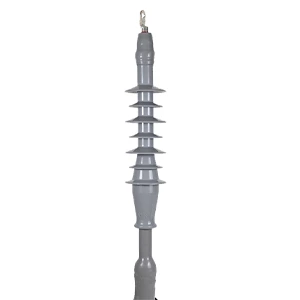


Cold shrink cable accessories cost 4 to 10 times more than heat shrink at purchase. Over a 20–30 year service life, total cost often favors cold shrink. Failure rates drop about 40%, maintenance intervals stretch, and outage exposure shrinks. The crossover point arrives around year 8–12.
What Are Cold Shrink Cable Accessories?
Material and Structure
Cold shrink products use EPDM or silicone rubber, pre-stretched over a removable core. The core holds elastic energy until installation. Once removed, the rubber contracts onto the cable. A cold shrink termination forms a void-free interface.
How They Work
Constant radial pressure, typically 0.3–0.8 MPa, keeps the seal tight. The material moves with the conductor during thermal cycling. This behavior separates cold shrink tubing from heat shrink alternatives. A cold shrinkable tube delivers the same principle in cover or splice designs.
Why Initial Prices Run 4–10× Higher
A 35kV cold shrink termination kit costs $200–350 per phase. A heat shrink kit runs $50–90. Manufacturing drives the gap: expansion control, core assembly, and quality checks add cost. Heat shrink production uses simpler extrusion and irradiation steps.
| Metric | Option A | Option B |
|---|---|---|
| Initial material cost | 4–10× | 1× |
| Installation time | 2–3 hours | 4–6 hours |
| Design life | 20–30+ years | 15–20 years |
| Hot work permit | No | Yes |
| Re-torque interval | ≥15 years | ~5 years |
The Breathing Effect and Seal Failure
Thermal Cycling
Conductors expand and contract with load and temperature. Heat shrink polyolefin has limited elastic recovery. When the cable contracts, the accessory may not follow. A gap forms at the interface.
Interface Pressure and Partial Discharge
Moisture enters the gap. Partial discharge accelerates. The failure mode stays hidden until breakdown. Cold shrink maintains pressure and prevents this pathway.
Failure Rates and Service Life
A 2009–2012 U.S. field study reported cold shrink termination failure rates of 0.022% and splice failure rates of 0.067%. Industry benchmarks place heat shrink failure rates roughly 40% higher under equivalent thermal cycling. Cold shrink design life reaches 20–30+ years; heat shrink typically 15–20 years.
Installation, Permits, and Labor
Cold shrink installation takes 2–3 hours; heat shrink takes 4–6 hours. No torch, no hot work permit, no fire watch. Consider these cost items:
-
Labor hours per termination
-
Permit and fire watch fees
-
Rework allowance from uneven heating
-
Crew time recovered on 50+ terminations
Maintenance and Outage Costs
Cold shrink terminations need re-torque inspection at 15 years or longer. Heat shrink terminations need checks every 5 years. A single unplanned termination failure can cost $50,000–$500,000. A photovoltaic plant with ten transformers loses about $17,500 per outage hour.
Lifecycle Cost Model
Evaluate four cost buckets:
-
Acquisition cost — kit price, shipping, inventory
-
Installation cost — labor, permits, tools, rework
-
Maintenance cost — inspection, re-torque, partial discharge testing
-
Failure cost — parts, emergency labor, outage, revenue loss
Heat shrink wins bucket one. Cold shrink wins buckets two, three, and four. For medium-voltage systems above 10kV, cold shrink often delivers lower total cost by year 8–12.
26/35kV Selection and Specs
Select by voltage, conductor cross-section, insulation diameter, and ambient temperature. A 26/35kV cold shrink termination typically covers conductor sizes from 25 to 630 mm². Underground distribution, renewable collector circuits, and critical feeders benefit most.
When Heat Shrink Still Makes Sense
Heat shrink remains rational for indoor installations with stable temperatures, low daily cycling, and accessible maintenance points. Short-duration projects with a defined decommissioning date also tilt toward heat shrink.
FAQ
Q: Are cold shrink cable accessories worth the cost?
A: For 20–30 year service and high outage costs, yes. The premium usually pays back by year 8–12.
Q: How long do cold shrink terminations last?
A: Design life reaches 20–30+ years, matching cable insulation life.
Q: What is a cold shrinkable tube used for?
A: It seals, insulates, and protects cable joints, terminations, and covers.
Q: Does cold shrink tubing need a torch?
A: No. Installation uses a removable core and elastic contraction.
26/35 kV Fully Cold Shrink Three-Core Terminal – Installation Outline Drawing

Electrical Performance Tests
| No. | Test Item | Standard Requirements |
| 1 | Power Frequency Withstand Voltage | 117 kV, 5 min, No Breakdown |
| 2 | DC Withstand Voltage | 104 kV, 15 min, No Breakdown |
| 3 | Partial Discharge Test | Partial Discharge Magnitude≤ 10 pC at 45 kV |
| 4 | Impulse Voltage Test | 200 kV, 10 positive and 10 negative impulses, no breakdown |
| 5 | Constant Voltage Load Cycling Test (in Air) | 65 kV, conductor temperature 95–100 ℃, total 60 cycles, no breakdown, no flashover |
| 6 | Moisture Test (Indoor) | 32.5 kV, 300 h, no breakdown, no flashover |
| 7 | Salt Spray Test (Outdoor) | 32.5 kV, 1000 h, no breakdown, no flashover |
Product overview
◆The product is available in single-core, two-core, three-core, four-core, and five-core versions, and has been widely used for low-voltage cable terminations and intermediate connections.
◆Excellent surface hydrophobicity, ensuring the product maintains strong resistance to contamination.
◆Compact size, lightweight, and reliable performance.
◆Application Scope: The product demonstrates excellent cold and heat resistance, making it particularly suitable for high-altitude, cold, humid, salt-spray, and heavily polluted environments.
Installation requires no open flame, making it ideal for flammable and explosive areas such as petroleum, chemical, mining, and tunneling sites.
 |
 |
 |
 |
| 26/35 kV Single-Core Cold Shrink Outdoor Termination – Installation Drawing | 26/35 kV Three-Core Cold Shrink Outdoor Termination – Installation Drawing | 26/35 kV Three-Core Cold Shrink Outdoor Termination – Supporting Drawing | 26/35 kV Three-Core Cold Shrink Intermediate Connection – Supporting Drawing |
Technical Data - Model Selection
| Product Type | Model | Conductor Cross-section(mm²) |
| 26/35 kV Cold Shrink Indoor Termination | GHD-35HNLS-3(1)*50-630 | 50-630 |
| 26/35 kV Cold Shrink Outdoor Termination | GHD-35HWLS-3(1)*50-630 | 50-630 |
| 26/35 kV Cold shrink Joint | GHD-35JTLS-3(1)*50-630 | 50-630 |
