How To Select Terminal Block Accessories For High-vibration Automotive And Industrial Applications
- Flammability rating (UL 94):
- V0
- Mounting:
- Compatible with standard 32 mm or 35 mm DIN rails (EN 60715)
- General:
- adjustable height, compatible with end brackets can be marked using snap-in labels
- Color:
- gray
For high-vibration panels, select terminal block accessories in this order: fit a screw-type terminal block end clamp at both rail ends, choose a spring-loaded din rail jumper bar, add an end plate for terminal block with a locking plate, and lock marker carriers with snap-in mounts. This sequence controls axial slide, contact wear, lateral motion, and label loss.
Why Accessories Fail Before Terminal Blocks
A terminal block body often passes vibration testing while the assembly still fails. The loose part is usually an accessory. End clamps slide along the rail, jumper bars lose contact pressure, and marker carriers vibrate out of their slots. Each accessory controls a different motion path, so treating them as interchangeable ignores how vibration energy travels.
Selection Framework by Vibration Direction
Three inputs decide accessory priority: dominant vibration axis, acceleration level, and rail length. Axial motion threatens the terminal stack. Lateral motion threatens insulation boundaries. Multi-axis motion threatens every friction-fit joint at once.
| Vibration Direction | First Action | Secondary Reinforcement |
|---|---|---|
| Axial along rail | Screw clamp at both ends | Locking plate on outer plate |
| Lateral across rail | Reinforced outer plate | Snap-in marker carrier |
| Multi-axis above 10 g | Spring-loaded bridging plus screw clamps | Dense terminal spacing |
Rails longer than 300 mm in high-vibration zones need clamps at both ends. This creates a compression constraint that limits cumulative movement across the stack.
Terminal Block End Clamp for Axial Retention
The terminal block end clamp stops the terminal row from sliding along the DIN rail. In stamping press controls and body-in-white lines, constant axial vibration pushes loose stacks toward the rail edge.
-
Screw-type clamps generate higher retention force than snap-on variants.
-
PA 66 and glass-filled housings add mechanical damping.
-
Tool access decides whether screw or snap-on types fit the enclosure.
Screw clamps suit rails where torque can be checked. Snap-on clamps suit dense cabinets where access is limited.
DIN Rail Jumper Bar Contact Force
A din rail jumper bar carries common potential across adjacent terminals. Under vibration, the risk sits at the contact interface between the bar and the terminal current bar.
Spring-Loaded vs. Fixed Designs
Spring-loaded bars maintain constant contact force and resist micro-motion that raises resistance. Fixed screw jumpers rely on torque retention and need periodic verification above 10 g acceleration. Insulated bars reduce accidental contact during maintenance in confined cabinets.
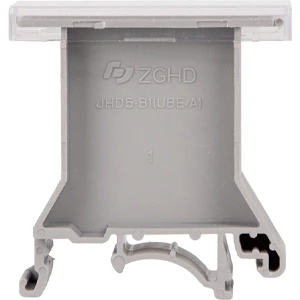
End Plate for Terminal Block and End Plate Terminal
An end plate for terminal block isolates the outermost conductive parts and sets a mechanical boundary for the row. Some designs add a sliding locking plate that engages conductor insulation when positioned correctly. This action limits vibration travel along the conductor into the terminal element.
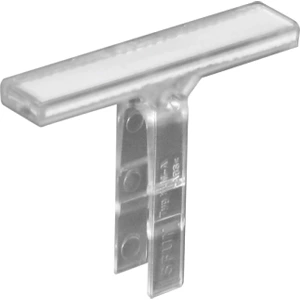
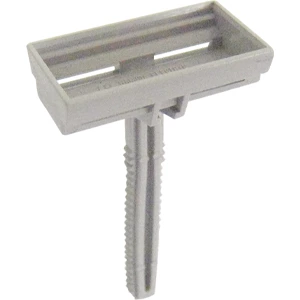
An end plate terminal assembly often includes a marker carrier for circuit identification. Adjustable-height carriers that snap into end brackets provide a mechanical interlock rather than a friction fit, so labels stay visible and the carrier never becomes a loose object inside the enclosure.
Material and Test Baseline
Terminal block accessories tested to IEC 60068-2-6 cover sinusoidal vibration from 5 Hz to 150 Hz. Specification sheets should list the severity class rather than a generic vibration-resistant claim. Polyamide housings with UL 94 V-0 rating resist wear and thermal aging. Metal springs, screws, and locking plates need corrosion protection, since vibration accelerates fretting corrosion at contact interfaces.
Field Verification Steps
-
Measure dominant vibration frequency at the mounting rail with an accelerometer.
-
Compare measured values against the accessory rating in IEC 60068-2-6.
-
Check clamp screw torque after 72 hours and re-torque if it drops below specification.
-
Inspect jumper bar contact resistance each quarter above 5 g continuous acceleration.
Screw-clamp systems need periodic torque checks. Spring-loaded jumper bars and push-in terminals hold force without re-torquing, so maintenance shifts to visual inspection of clamp position and carrier seating.
FAQ
Q: What is the role of a terminal block end clamp?
A: It prevents the terminal row from sliding along the DIN rail under axial vibration.
Q: When should a din rail jumper bar be spring-loaded?
A: Above 10 g acceleration, spring-loaded bars hold contact force better than fixed screw types.
Q: Does an end plate for terminal block stop lateral vibration?
A: It defines the mechanical boundary and, with a locking plate, limits conductor movement.
Q: How does an end plate terminal lock a marker carrier?
A: Snap-in mounts create a mechanical interlock instead of a friction fit.
| Model | JHD5-DB1(KLM-2) |
| Number of packages | 200 |
Thickness/Height( )/Width mm )/Width mm |
12.5/37/22.2 |
| Applicable products | Can be used in conjunction with JHD5-D1,Use as a marking accessories |