Fuse Terminal Blocks: How They Cut Short-circuit Current In 8ms
- Type:
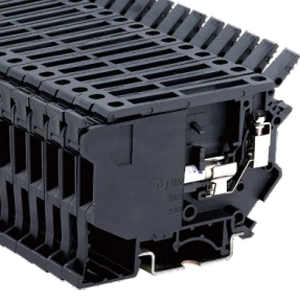
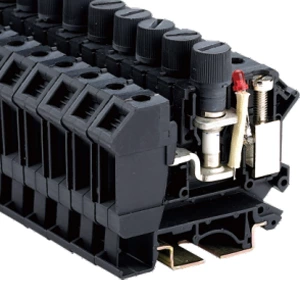
- Fuse modular terminal block
- Fuse Type:
- Glass / ceramics / ... G / 5 x 20, 5 x 25
- Nominal Voltage:
- 500 V
- Nominal Current:
- 10 A
- Number Of Positions:
- 1
- Connection Method:
- Screw connection
- Rated Cross Section:
- 1.5 mm²
- Cross Section:
- 0.5 mm²- 16 mm²
- Color:
- black
A fuse terminal block clears a short circuit in 8–10 ms by melting a silver element at 960°C, ionizing it into plasma, and letting quartz sand quench the arc into an insulating fulgurite. This current-limiting action stops the fault before peak current arrives. Fuse Terminal Blocks thus protect downstream equipment from peak let-through current and I²t energy.
How a Fuse Terminal Block Clears a Short Circuit
Fault Current Hits the Narrow Notch
During a short circuit, prospective short-circuit current rises toward its peak. This current passes through a thin silver strip with narrowed notches. Current density at these notches climbs above normal conductor levels. Joule heating scales with current squared times resistance. Heat concentrates at the notch. Temperature reaches silver's 960°C melting point in a fraction of a millisecond.
Four Phase Changes Inside the Silver Element
The interruption follows four stages:
-
Solid to liquid: silver melts at 960°C.
-
Liquid to vapor: silver boils at 2162°C.
-
Vapor to plasma: silver vapor ionizes into a conductive arc.
-
Plasma to insulator: quartz sand absorbs heat and stops ionization.
No moving parts, no trip mechanism, no coordination delay.
| Stage | Temperature | State | Action |
|---|---|---|---|
| Melting | 960°C | Liquid | Element breaks |
| Boiling | 2162°C | Vapor | Arc forms |
| Ionization | >2000°C | Plasma | Conducts current |
| Quenching | Cooling | Solid | Insulates gap |
Quartz Sand Arc Quenching and the Fulgurite Barrier
What Happens Inside the Cartridge
Quartz sand is not passive filler. When silver vapor expands, sand particles touching the arc fuse into a glass-like fulgurite. The fulgurite conducts briefly at high temperature. As it cools, it loses conductivity. Within milliseconds, it becomes a solid insulator that blocks current. Heat transfer to cooler sand granules prevents pressure buildup inside the fuse body.
Why No Mechanical Breaker Matches This Speed
A mechanical breaker relies on contacts, springs, and trip mechanisms. Each adds delay. A fuse relies only on material thermal response. Arc quenching in quartz sand occurs faster than any mechanical operation.
Current-Limiting Speed: 8–10 ms vs Breaker
Peak Let-Through Current and I²t
On a 50 Hz system, the first prospective current peak arrives in 8–10 ms. A current-limiting fuse interrupts before that peak. It reduces peak let-through current and I²t let-through energy. Downstream busbars and cables see less mechanical and thermal stress.
| Item | Current-Limiting Fuse | Standard Breaker |
|---|---|---|
| Clearing time | 8–10 ms | 20–100 ms |
| Peak let-through | Fraction of prospective | Full prospective |
| Arc quenching | Quartz sand | Air or vacuum |
| Mechanical wear | None | Contact wear |
| I²t energy | Lower | Higher |
How to Select a Fuse Type Terminal Block
Voltage, Current, Breaking Capacity
Selection steps:
-
Rated voltage must exceed system voltage.
-
Rated current must match continuous load with derating margin.
-
Breaking capacity must exceed prospective fault current.
-
Fuse size must fit the holder, such as 5 × 20 mm.
-
Certification must meet IEC 60269-1 or UL 248.
A fuse type terminal block for DIN rail often accepts 16 mm² conductors and currents up to 16 A.
Glass vs Ceramic Cartridges
A glass fuse terminal block accepts transparent cartridges for visual inspection. Ceramic versions suit higher breaking-capacity applications. Housing material affects pressure withstand during arc quenching.
For a 16 A modular fuse terminal block for DIN rail, view the product page and datasheet.
Price Factors and LED Indicator Options
What Affects Fuse Terminal Block Price
Several factors affect fuse terminal block price:
-
Rated current and voltage
-
Number of poles
-
Breaking capacity
-
Certifications
-
Housing material
-
Fuse size
-
LED indication
A fuse terminal block price rises with higher ratings and more certifications.
Fuse Terminal Block with LED Indicator Price
A fuse terminal block with led indicator price is higher than a non-LED version. The LED module and voltage-dropping circuit add components. For 24 V DC control circuits, a blown-fuse LED gives immediate visual fault identification. This reduces troubleshooting time in dense panels. Check current price and datasheet for exact figures.
| Version | Components | Fault Finding | Price Impact |
|---|---|---|---|
| Non-LED | Fuse holder only | Multimeter needed | Lower |
| LED | LED module and circuit | Visual indication | Higher |
FAQ
Q: How fast does a fuse terminal block clear a short circuit?
A: Current-limiting fuses clear faults in 8–10 ms on 50 Hz systems, before the first current peak.
Q: What temperature does the fuse element reach during a fault?
A: The silver element melts at 960°C and boils at 2162°C to form an arc.
Q: Can a fuse terminal block be reused after clearing a fault?
A: No. The melting element is destroyed. Install a replacement cartridge fuse.
Q: What is the difference between a glass fuse terminal block and a ceramic one?
A: Glass versions allow visual inspection. Ceramic versions handle higher breaking capacity and pressure during arc quenching.
Q: What affects fuse terminal block price?
A: Ratings, poles, breaking capacity, certifications, housing material, fuse size, and LED indication affect price.
| Model | Function | Wire IEC cross-section | Wire UL | Thickness |
| JHD5-16RD | 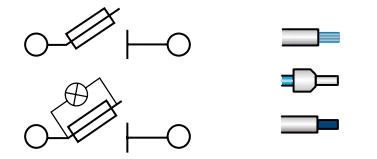 |
16 mm² 10 mm² 16 mm² |
4 AWG 8 AWG 4 AWG |
12 mm |
| Maximum current | Number of packages | Thickness/Height( )/Width mm )/Width mm |
Rated voltage/rated current/rated cross-sectior |
| 6.3A | 42 | 12/59/62 | 800 V/10 A/16 mm² |
Specfication:
| With Light | With Light
|
|||||||||
| The Fuse same as JHD5-4RD(UK5-HESl) | ||||||||||
| Connected assembly | ||||||||||
| Model | ||||||||||
| ZL10-16 | ||||||||||
| With Fuse: The current is determined by the fuse,and the voltage is determined by the light. | ||||||||||
| Marking tags | ZB8 | |||||||||
| Screw/Tightening torque(Nm) | M4/1.2 | |||||||||
| Material | PA | |||||||||
| Flame retardant rating UL-94 | V0 | |||||||||
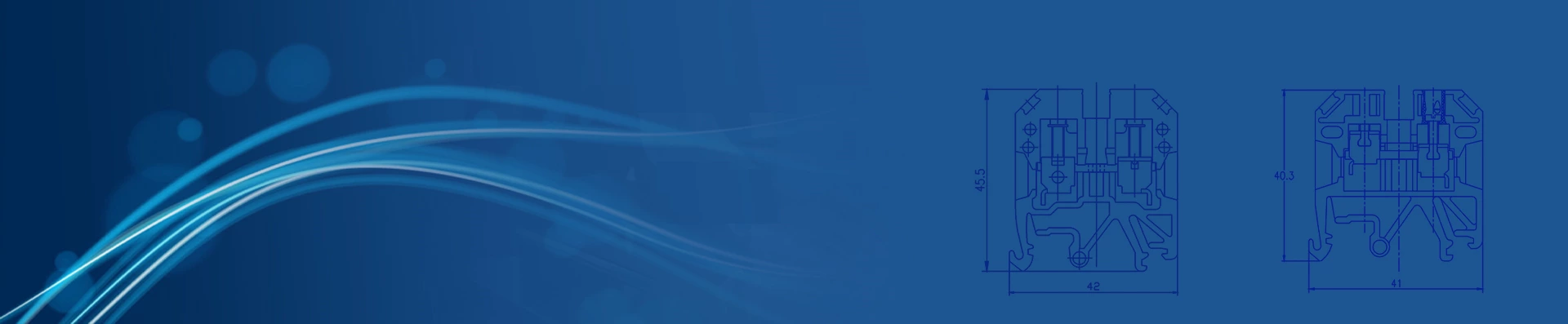
| Dimensions | 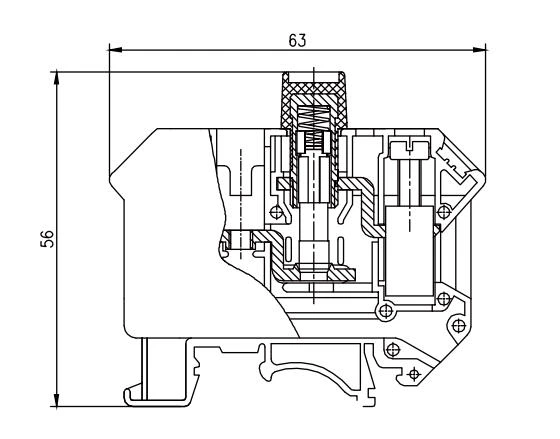 |
With universal mounting feet for standard top-hat(Ω profile) and G-profile DIN rail mounting.