Cold Shrink Cable Accessories: 3 Factors That Decide Quality
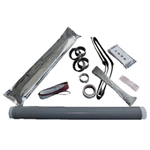
Cold shrink cable accessories quality depends on three field checks, not factory labels alone. Use this sequence before installation:
-
Match voltage class and cable diameter to the kit rating.
-
Stop work if humidity exceeds 70%; seal exposed ends with a cable abandonment kit.
-
Check manufacture date against shelf life; reject relaxed support cores.
If one check fails, stop. A cold shrink cable joint can pass factory tests and still fail from diameter mismatch, moisture during installation, or expired rubber.
Factory Rating vs Field Performance
Cold shrink cable accessories rely on elastic recovery to create radial pressure. Factory tests cannot cover transport, storage, or installation conditions. A kit rated for 15 kV may still fail if the cable diameter falls outside the published range.
Selection Errors
Voltage Class Mismatch
The accessory rating must equal or exceed the cable rating. A 6 kV part on an 8.7/15 kV cable reduces insulation margin. Breakdown can occur at the stress cone.
Diameter and Cable Type Match
Measure insulation and jacket diameters. The kit lists before-shrink and after-shrink inner diameters. XLPE, EPR, and PILC need different stress cone designs. Conductor size changes the electrical field at the semi-conductive shield cutback. A cold shrink joint rated for one cable type may not seal another.
-
Measure cable insulation diameter.
-
Compare with after-shrink inner diameter.
-
Reject kit if cable is below that value.
Installation Conditions
Humidity and Moisture Control
Stop installation above 70% relative humidity. Use a shelter and dehumidifier if work continues. Seal exposed cable ends with a cable abandonment kit or end cap overnight.
Support Core Removal
Pull the support core in one continuous motion. Partial removal creates uneven radial pressure. Do not bend the cable beyond its minimum bending radius after installation.
Post-Installation Inspection
-
Confirm the stress cone fully covers the semi-conductive shield cutback.
-
Verify no air gaps between accessory and cable insulation.
-
Check rain sheds are correctly oriented.
-
Run a partial discharge test where field conditions permit.
Shelf Life and Storage
Manufacture Date vs Purchase Date
Shelf life starts at manufacture, not purchase. Medium-voltage cold shrink cable joints often specify three years. A cable abandonment kit may allow five years under recommended conditions.
Temperature and Humidity Limits
| Parameter | Recommended Range |
|---|---|
| Temperature | 10–27 °C |
| Relative humidity | Below 75% |
| Exposure | Clean, dry, away from direct sunlight |
If stored below freezing, warm to at least 5 °C and inspect before use.
Pre-Installation Inspection
-
Check manufacture date against published shelf life.
-
Inspect support core for relaxation.
-
Reject cracked, discolored, or contaminated rubber.
-
Verify kit contents against instructions.
Three Failure Modes Compared
| Stage | Cause | Field Symptom | Verification |
|---|---|---|---|
| Selection | Diameter mismatch | Moisture ingress | Measure after-shrink ID |
| Installation | High humidity | Partial discharge | Humidity log |
| Storage | Expired rubber | Low radial pressure | Manufacture date |
FAQ
Q: Can a cold shrink cable joint be reused after removal?
A: No. Once the support core is removed and the rubber recovers, permanent set occurs. Re-stretching compromises sealing.
Q: What is the most common field error?
A: Applying the accessory outside its published cable diameter range. This prevents sufficient radial pressure and creates a path for moisture ingress.
Q: Does a cable abandonment kit need the same storage controls?
A: Yes. It contains cold shrink tubes and end caps with the same shelf-life limits.
 |
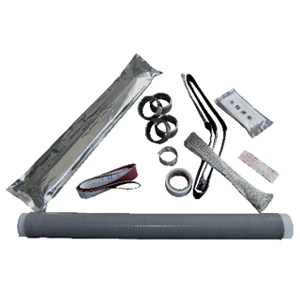 |
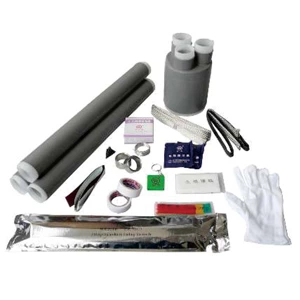
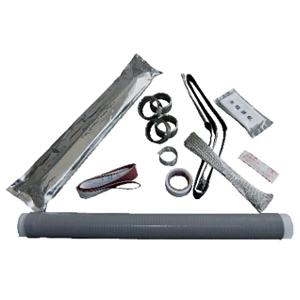
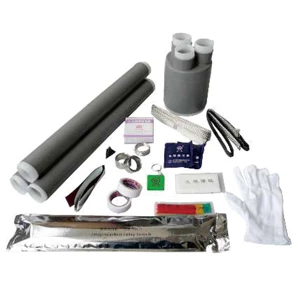
| Cold Shrink Three-Core Sealing Assembly | Cold Shrink Single-Core Sealing Assembly |
Technical Data - Model Selection
| Product Type | Model | Conductor Cross-section(mm²) | Product Type | Model | Conductor Cross-section(mm²) |
| 8.7/15 kV Single-Core Cold Shrink Preparation Parts | GHD-15ZBLS-1*25-50 | 25-50 | 12/20 kV Sing-Core Cold Shrink Preparation Parts | GHD-20ZBLS-1*35-70 | 35-70 |
| GHD-15ZBLS-1*70-120 | 70-120 | GHD-20ZBLS-1*95-150 | 95-150 | ||
| GHD-15ZBLS-1*150-240 | 150-240 | GHD-20ZBLS-1*185-300 | 185-300 | ||
| GHD-15ZBLS-1*300-400 | 300-400 | GHD-20ZBLS-1*400-500 | 400-500 | ||
| 8.7/15 kV Three-Core Cold Shrink Preparation Parts | GHD-15ZBLS-3*10-16 | 25-50 | 12/20 kV Three-Core Cold Shrink Preparation Parts | GHD-20ZBLS-3*35-70 | 35-70 |
| GHD-15ZBLS-3*25-50 | 70-120 | GHD-20ZBLS-3*95-150 | 95-150 | ||
| GHD-15ZBLS-3*70-120 | 150-240 | GHD-20ZBLS-3*185-300 | 185-300 | ||
| GHD-15ZBLS-3*150-240 | 300-400 | GHD-20ZBLS-3*400-500 | 400-500 | ||
| 18/20 kV Single-Core Cold Shrink Preparation Parts | GHD-24ZBLS-1*35-95 | 35-95 | 26/35 kV Single-Core Cold Shrink Preparation Parts | GHD-35ZBLS-1*50-120 | 50-120 |
| GHD-24ZBLS-1*120-185 | 120-185 | GHD-35ZBLS-1*150-240 | 150-240 | ||
| GHD-24ZBLS-1*240-400 | 240-400 | GHD-35ZBLS-1*300-400 | 300-400 | ||
| GHD-24ZBLS-1*500-630 | 500-630 | GHD-35ZBLS-1*500-630 | 500-630 | ||
| 18/20 kV Three-Core Cold Shrink Preparation Parts | GHD-24ZBLS-3*35-95 | 35-95 | 26/35 kV Three -Core Cold Shrink Preparation Parts | GHD-35ZBLS-3*50-120 | 50-120 |
| GHD-24ZBLS-3*120-185 | 120-185 | GHD-35ZBLS-3*150-240 | 150-240 | ||
| GHD-24ZBLS-3*240-400 | 240-400 | GHD-35ZBLS-3*300-400 | 300-400 | ||
| GHD-24ZBLS-3*500-630 | 500-630 | GHD-35ZBLS-3*500-630 | 500-630 |
